Marina Abramović
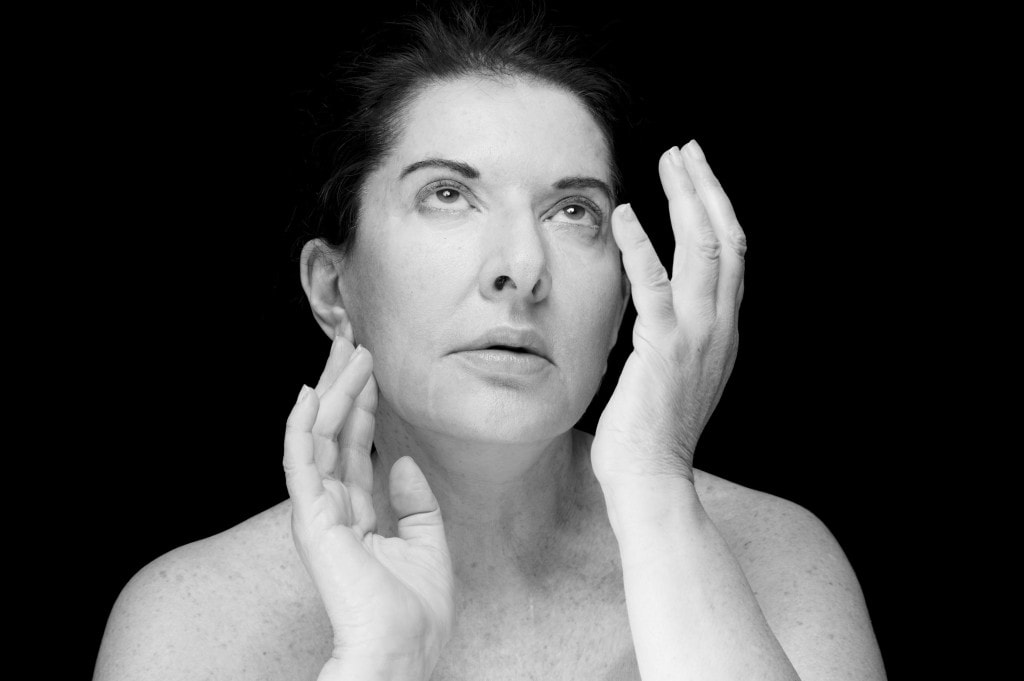
What you're doing is not important. What is really important is the state of mind from which you do it.
Marina Abramović
Some artists leave behind paintings. Marina Abramović leaves behind experiences.
For more than fifty years, the Serbian performance artist has challenged our understanding of what art can be, not through objects, but through endurance, silence, vulnerability, and human connection. Often called the "grandmother of performance art," Abramović has built a career on one simple yet radical idea: that the artist's body can be the artwork.
Her performances aren't always easy to watch. They're often physically demanding, emotionally intense, and deeply uncomfortable. Yet that's precisely what makes them unforgettable.
Art Beyond the Canvas
Unlike painting or sculpture, performance art exists in a specific moment. There is no finished object, only an experience shared between the artist and the audience. Abramović has spent decades exploring this relationship. Instead of asking viewers to admire her work from a distance, she invites them to become part of it. The result is art that feels less like observation and more like participation.
The Performance That Changed Everything
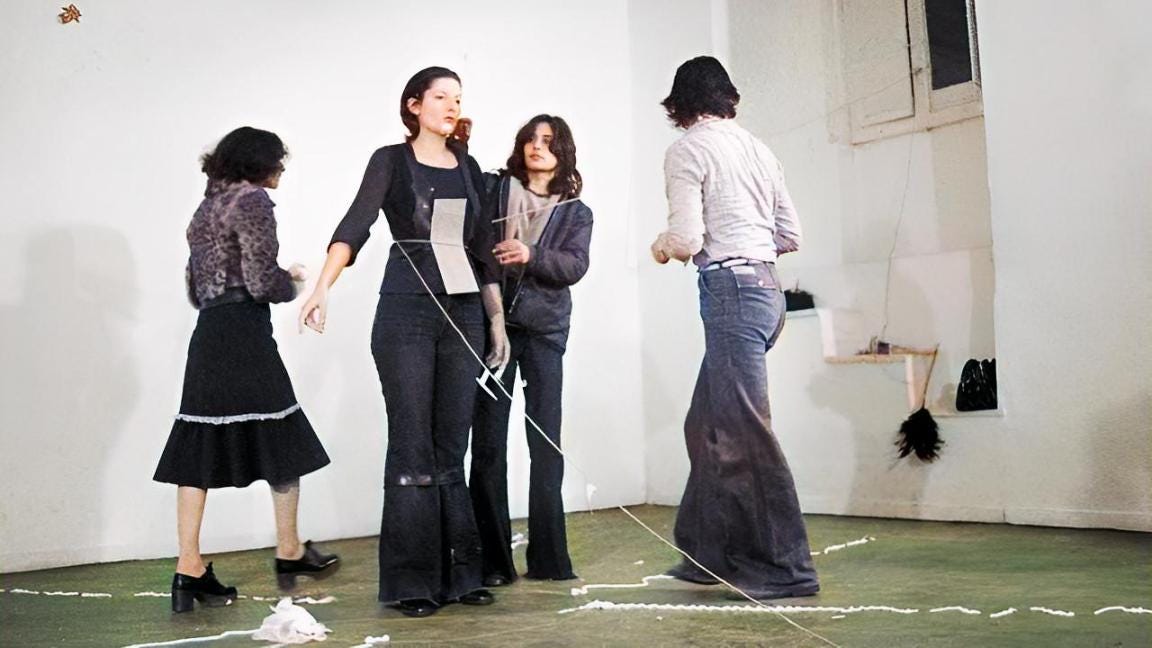
One of her most influential works, Rhythm 0 (1974), remains a landmark in contemporary art.
For six hours, Abramović stood completely still beside a table containing 72 objects, ranging from a rose and a feather to scissors, knives, and even a loaded gun. Visitors were told they could use the objects on her in any way they wished. What began with gentle gestures gradually turned darker. People cut her clothes, injured her skin, and pushed the limits of what they believed they could do without consequences. The performance became less about Abramović and more about human nature. It revealed how quickly social boundaries can disappear when responsibility is removed.
The Power of Simply Being Present
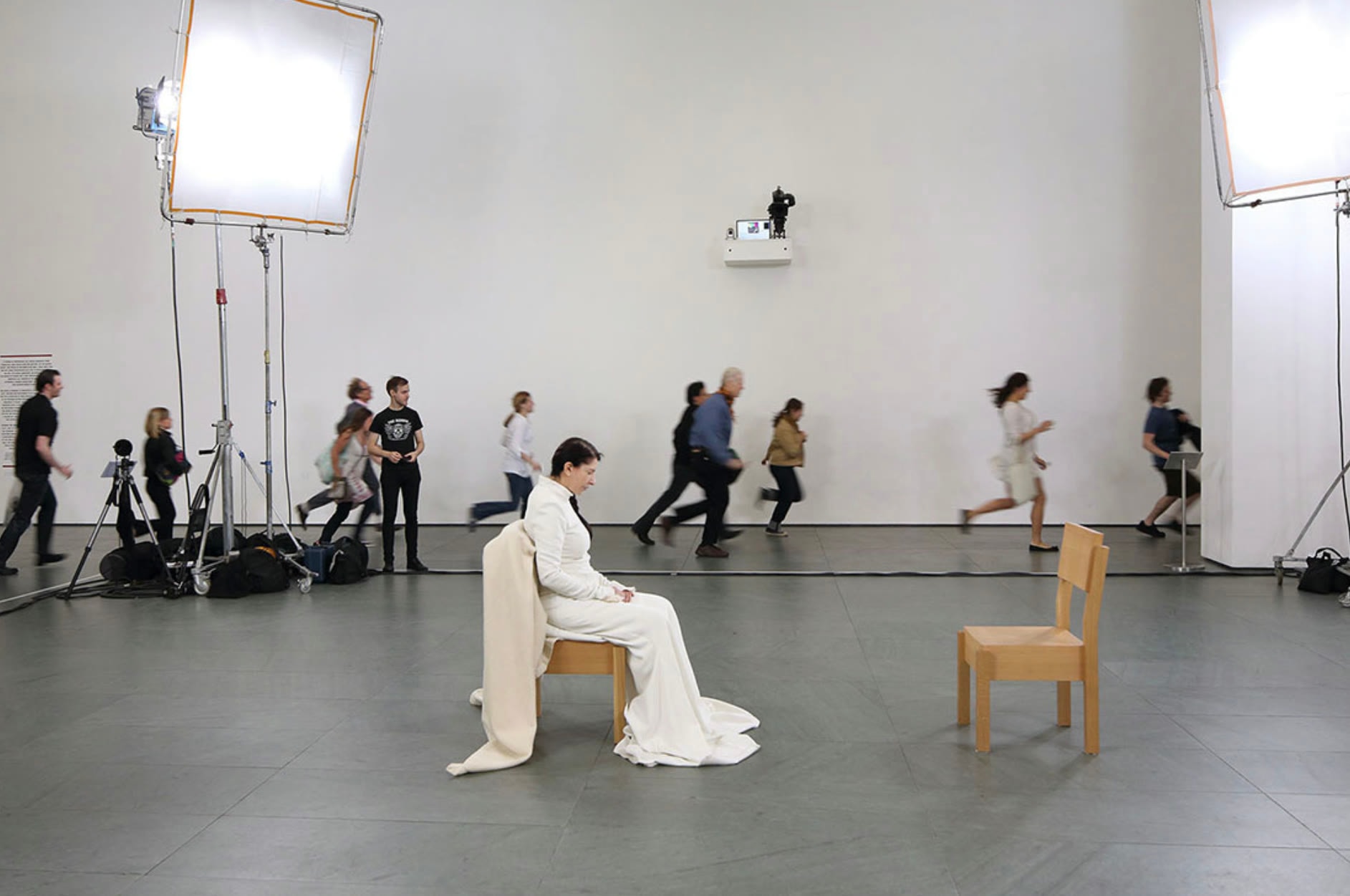
If Rhythm 0 explored the darker side of humanity, The Artist Is Present (2010) revealed something entirely different. During her retrospective at New York's Museum of Modern Art, Abramović sat silently in a chair for nearly three months. One by one, visitors sat opposite her in complete silence.
No conversation.
No performance in the traditional sense.
Just eye contact.
Thousands participated, many leaving in tears. The work demonstrated that in an increasingly distracted world, genuine attention has become one of the rarest forms of connection. Sometimes doing nothing can become the most powerful artistic gesture of all.
Why Her Work Still Matters
Marina Abramović's work is often described as extreme, but beneath the endurance lies something remarkably human.
She asks questions that remain relevant today:
- How present are we?
- What does vulnerability really look like?
- Can silence communicate more than words?
- What responsibility does the viewer carry?
These ideas extend far beyond museums. They resonate with designers, architects, photographers, and creatives who understand that meaningful work isn't always about adding more, it is often about stripping everything back to what truly matters.
A Lasting Influence
Abramović has influenced generations of contemporary artists by proving that art doesn't always need a physical form to have lasting impact. A moment, a gesture, or even shared silence can be just as powerful as any object hanging on a gallery wall. Her work reminds us that the most memorable experiences aren't always the loudest or the most spectacular. Sometimes they begin with something surprisingly simple: being fully present. For creatives, that's perhaps her greatest lesson. In a world obsessed with speed and constant stimulation, attention itself has become a form of art.